
Skip the Dip: Reducing dipstick urinalysis in over 65s
‘Skip the Dip’ aims to support implementation of guidance that urine dipstick tests are not recommended in assessing for evidence of a UTI in people, aged 65 years and over.
Why this campaign matters
Bacteria in the urine is common in older people, particularly those living in care homes and those with a long-term catheter. This is known as asymptomatic bacteriuria. In the absence of signs and symptoms of infection, it is not harmful but will produce positive nitrite and leucocyte results on urine dipsticks.
Key Message: Positive dipsticks often lead to unnecessary antibiotics in older adults
Positive dipstick results can be difficult to ignore and may lead to automatic antibiotic prescribing. However, diagnosing a UTI based on dipstick testing alone is unreliable in older adults. Treating asymptomatic bacteriuria exposes patients to unnecessary side effects and contributes to antimicrobial resistance, without clinical benefit.
To improve the management of UTIs in people aged 65 and over, healthcare professionals should:
- Diagnose UTIs based on clinical assessment of signs and symptoms, supported by appropriate diagnostic tools
- Avoid using urine dipsticks in people aged over 65 and those with long-term catheters
- Prescribe antibiotics only when clearly indicated
Who this campaign is for
Skip the Dip supports healthcare staff working in:
- GP practices
- Care homes
- Community pharmacies
How you can get involved
To help you share and implement the guidance, there are some downloadable resources below:
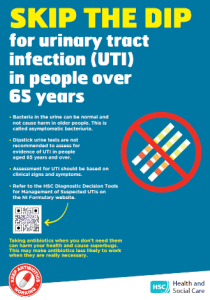
To download as pdf click here.
What’s next
A leaflet for patients is in development and will be shared here soon.